Pre-Drywall Inspections in Houston, TX
Catch Problems While You Can Still See Them
A Phase 2 inspection happens before insulation and drywall go in, while framing and rough‑ins are still open. Dave finds issues while they’re visible so your builder can fix them before the walls are closed.
- Framing & Structural Review
- Electrical Rough-In
- Plumbing Rough-In
- HVAC Rough-In
- Exterior Envelope Review
- Licensed WDI Inspection
What Is a Phase 2 Pre-Drywall Inspection?
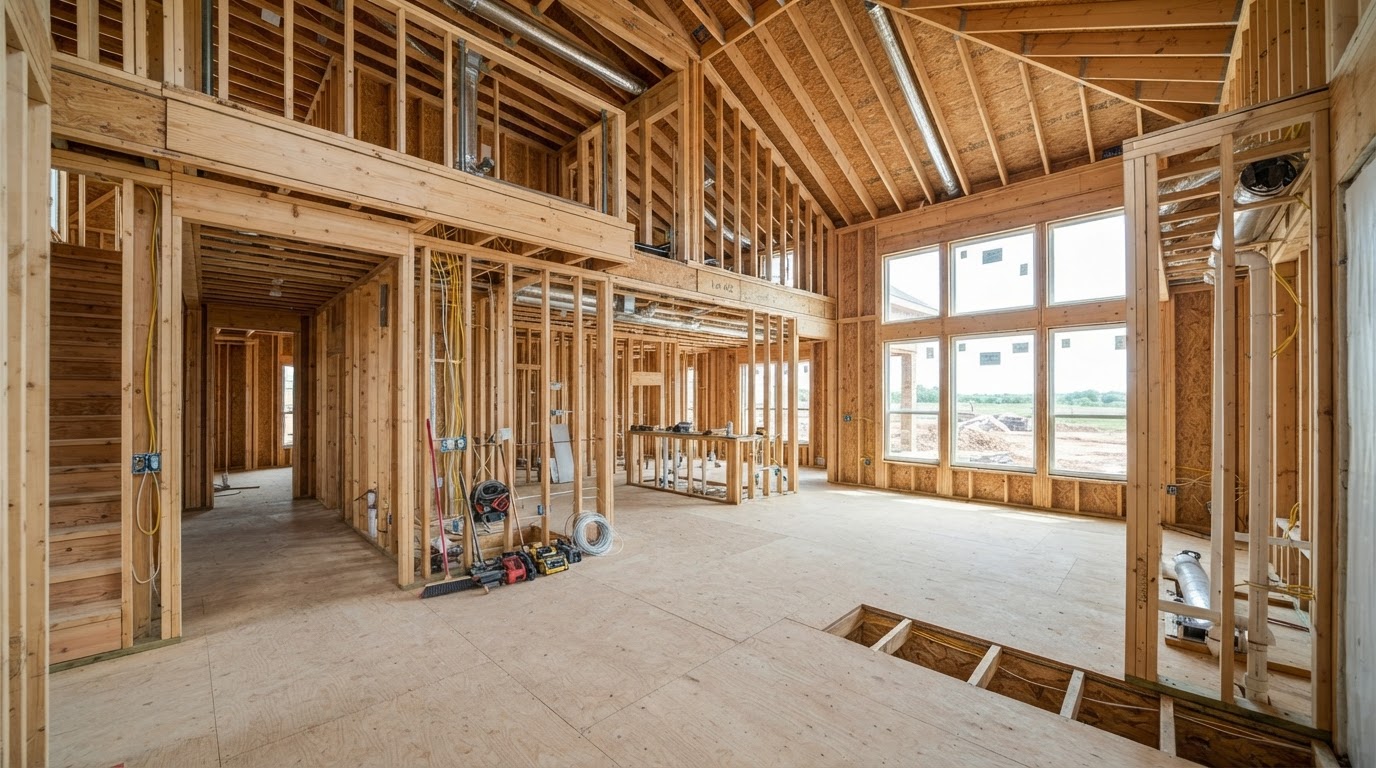
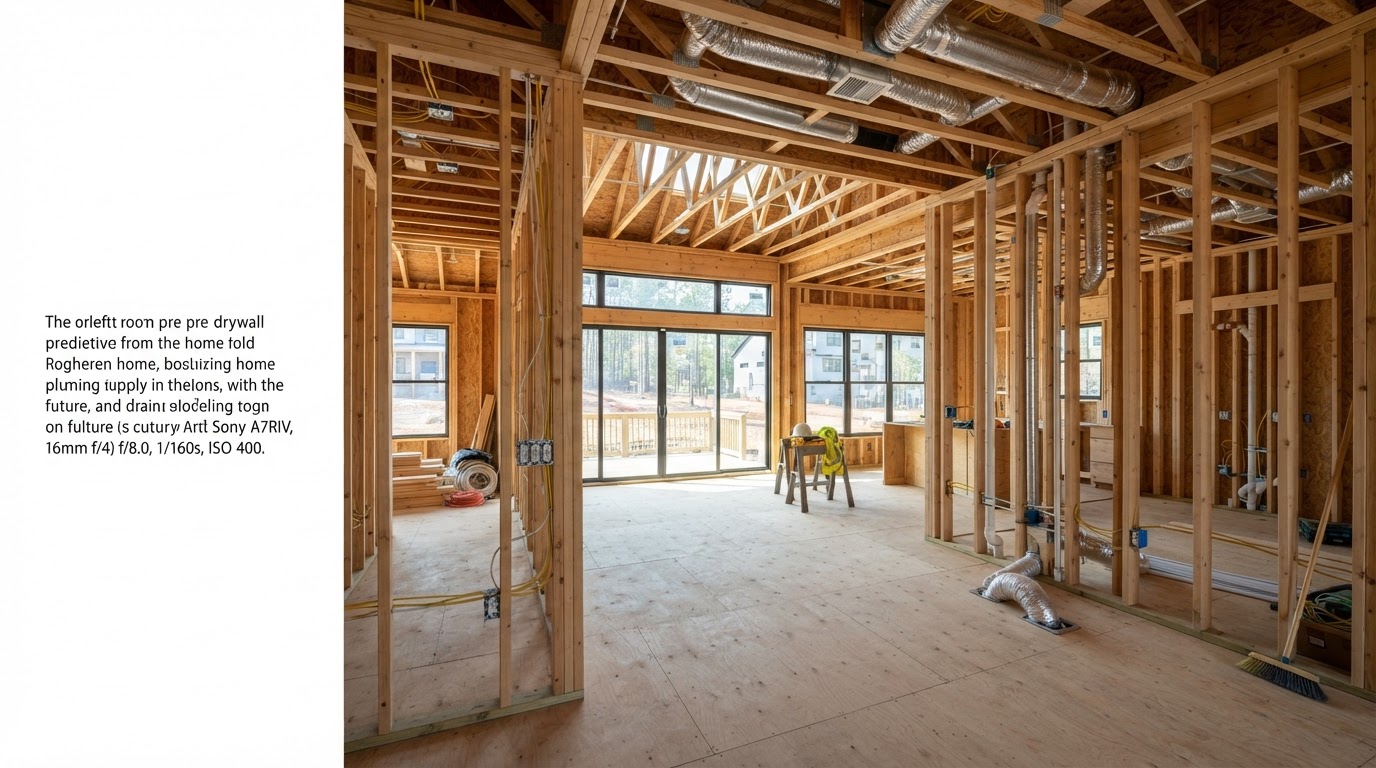
Phase 2 is the framing / pre-drywall stage of new construction. The framing is complete, rough-in electrical, plumbing, and HVAC are installed, roof and windows are on, and the builder is getting ready for insulation and drywall.
At this stage, Dave:
- Walks framing and structural components that will soon be concealed
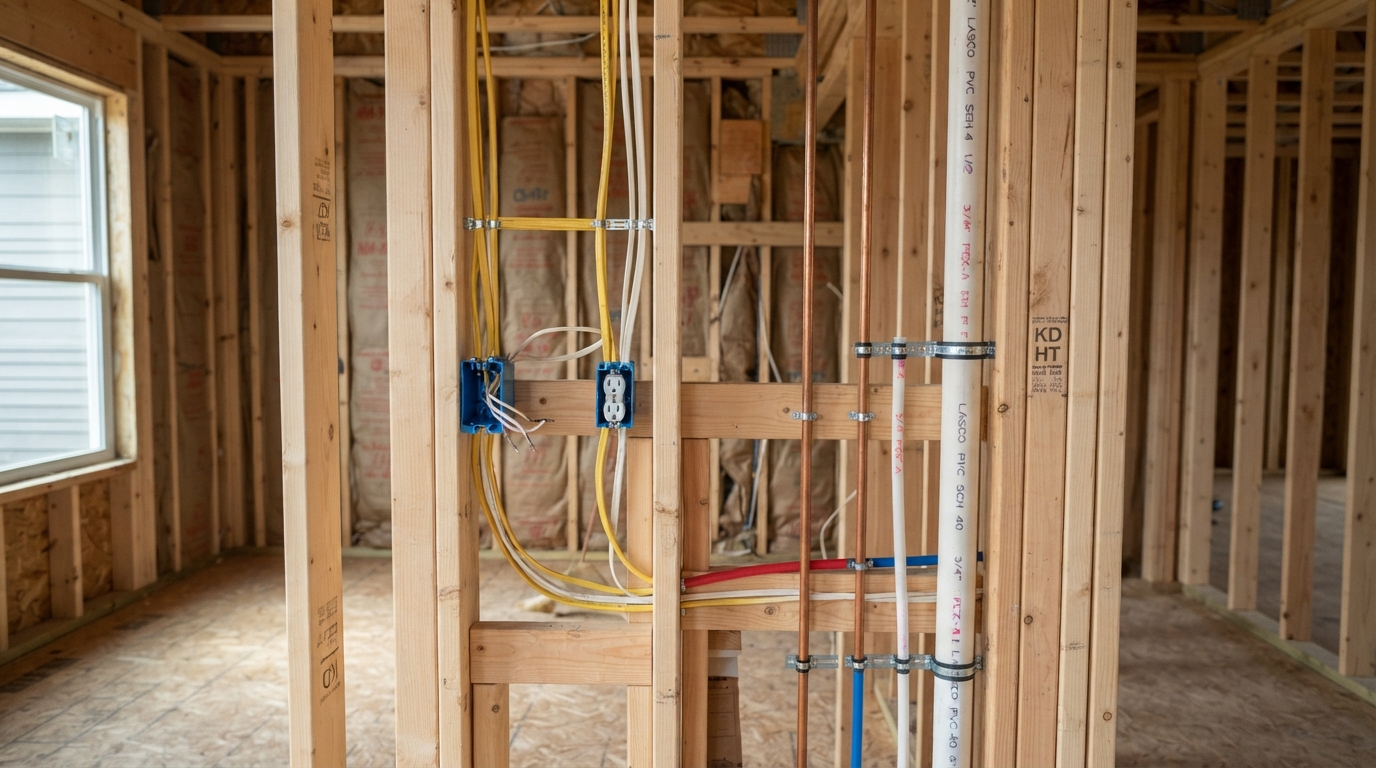
- Evaluates electrical, plumbing, and HVAC rough-ins where accessible
- Reviews house wrap, flashings, and exterior penetrations for water-management issues
- Documents defects and safety concerns in a clear, builder-ready report
Once drywall goes up, most of this work is hidden. Phase 2 is your chance to make sure the "bones and guts" of the house are right.
Best Time to Schedule
- Framing Complete
- Roof Installed
- Windows & Doors Installed
- Rough-Ins Complete
What We Inspect at Phase 2
A detailed evaluation of your home's framing, rough-in systems, and exterior envelope before everything gets covered.
Framing & Structural
- Wall, floor, and roof framing where visible
- Framing connectors and fasteners where accessible
- Load paths, bearing points, and general workmanship
- Stairs, guardrails, and other structural elements in place
Why it matters: Structural issues are far easier to address now than after finishes are installed and movement or cracking appears.
Roof Structure & Sheathing
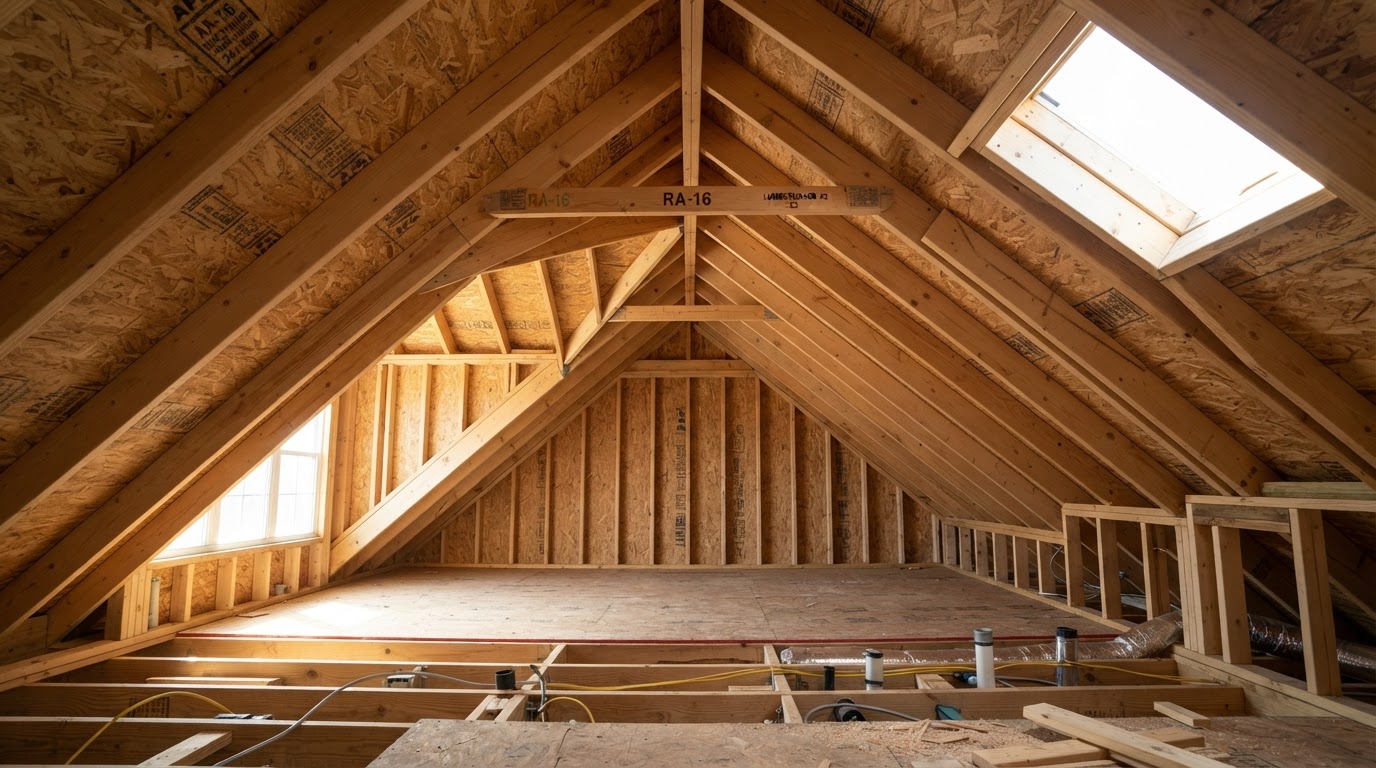
- Roof framing from the attic and/or interior vantage points
- Roof sheathing, fasteners (where visible), and penetrations
- Visible signs of moisture intrusion or daylight at joints
Why it matters: This is your chance to see how the roof is actually built, not just how it looks from the street.
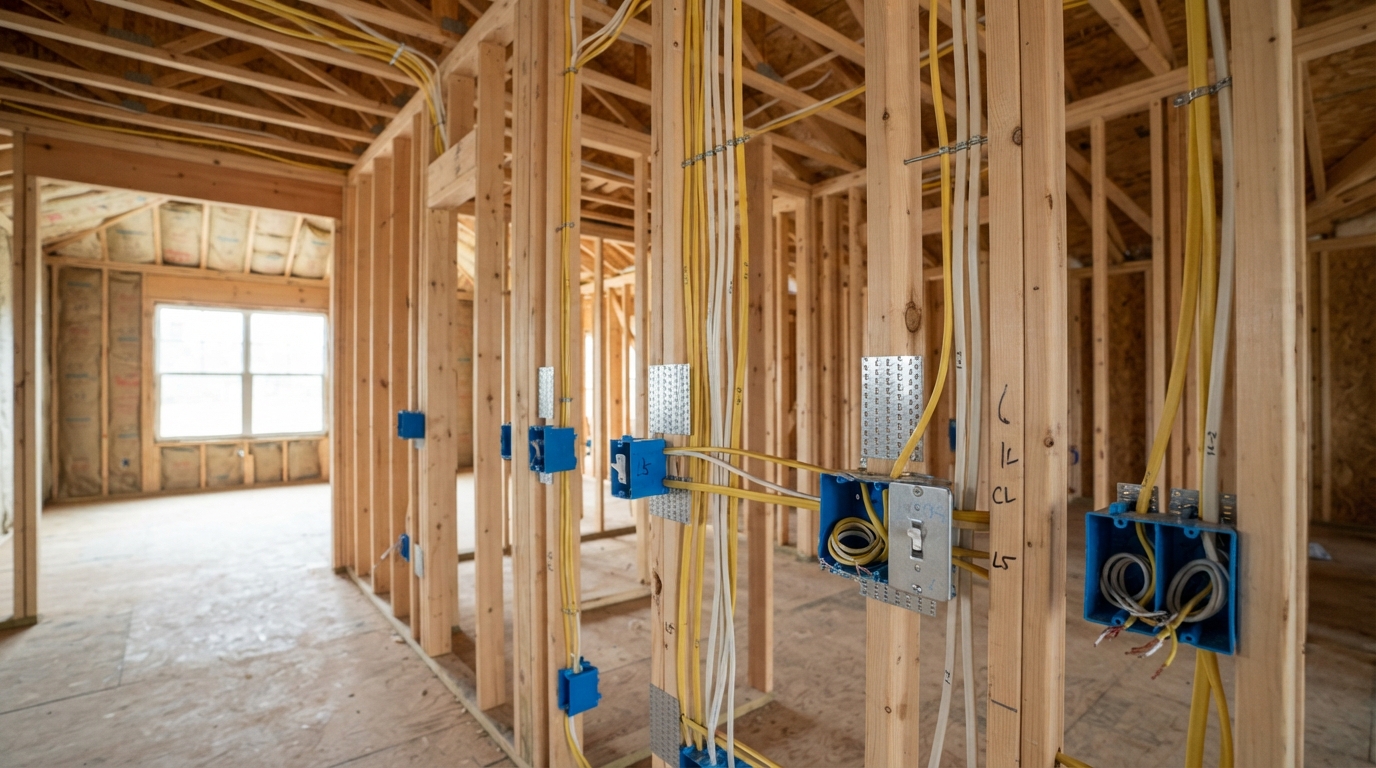
Electrical Rough-In
- Wiring runs where accessible
- Boxes, staples, and protection plates where required
- Panel location and basic layout
- Rough-in for lighting, receptacles, and major equipment
Why it matters: Damage to conductors, missing protection, or improper routing is much easier to correct now than after walls and ceilings are closed.
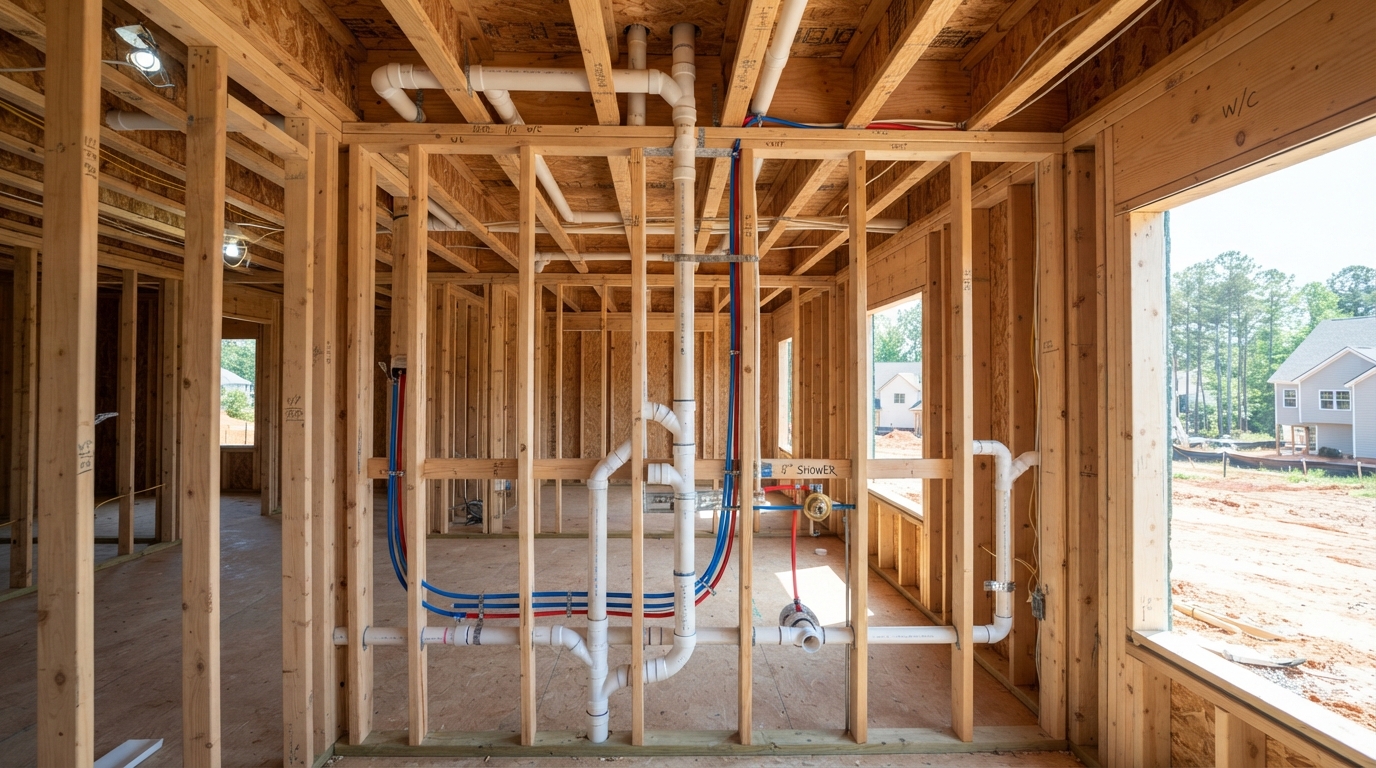
Plumbing Rough-In
- Supply and drain piping where visible
- Penetrations through framing with proper support and protection
- Tub, shower, and fixture locations
- Venting and routing where accessible
Why it matters: Improper notching, support, or routing can lead to leaks, structural damage, and noisy or poorly performing plumbing systems.
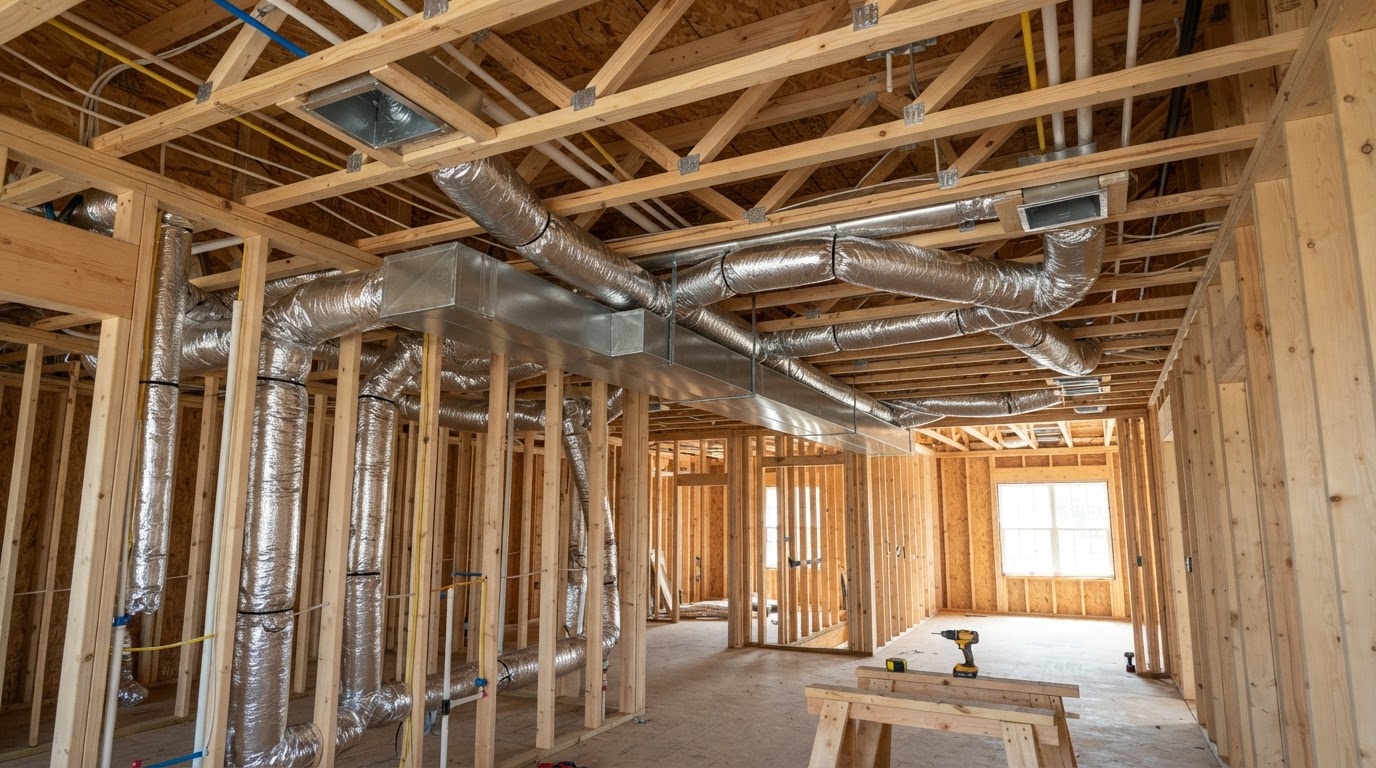
HVAC Rough-In
- Duct routing and support where visible
- Return and supply locations
- Vent terminations and penetrations where accessible
Why it matters: Poor duct layout and support can lead to comfort issues, noise, and efficiency problems that are costly to fix once the home is finished.
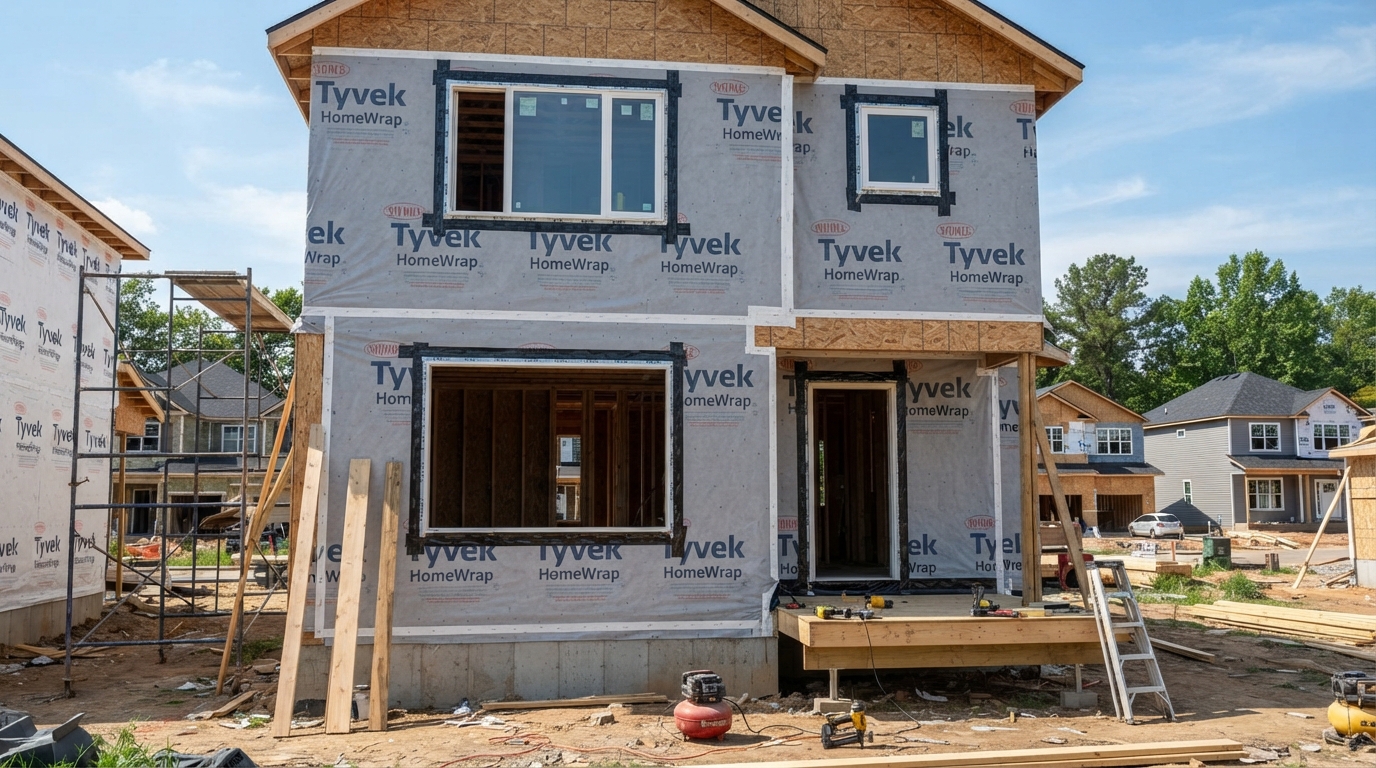
Exterior Envelope (Where Accessible)
- House wrap and flashing details at visible areas
- Window and exterior door installations (visible portions)
- Penetrations for vents and utilities where accessible
Why it matters: Water that gets past failed flashing or house wrap doesn't show up until after you move in. Phase 2 is the best time to catch these issues.
Ready to Have Dave Inspect Before the Walls Close?
Request your Phase 2 inspection online and Dave will coordinate timing with your builder pre-drywall schedule.
Why Phase 2 Matters
City inspections and builder checks are important, but they're not a full, independent review of how everything behind the walls actually went together.
Once insulation and drywall go up, framing, wiring, plumbing, and ductwork are hidden for good. A Phase 2 inspection catches problems while they're still visible — when corrections are simple, fast, and far less expensive for your builder to complete.
Catch Hidden Problems Early
Framing defects, wiring issues, and plumbing concerns are documented while every system is still exposed and accessible.
Easier Builder Corrections
Trades can return to fix issues while walls are open — no cutting into finished drywall or disrupting your move-in timeline.
Avoid Costly Finished-Home Repairs
Problems found now cost a fraction of what they'd cost to repair after insulation, drywall, and finishes are installed.
Why Homeowners Choose Tague for Phase 2
Our Phase 2 Inspection Process
Frequently Asked Questions
Schedule Your Phase 2 Pre-Drywall Inspection
You only get one chance to inspect what's inside your walls before it's covered forever. Make sure an experienced, independent inspector looks at your home during this critical stage.